Homeostatic Urban Morphologies
An Evolutionary Model to Generate Urban Morphologies With Embedded Homeostatic Behaviours
Milad
Showkatbakhsh
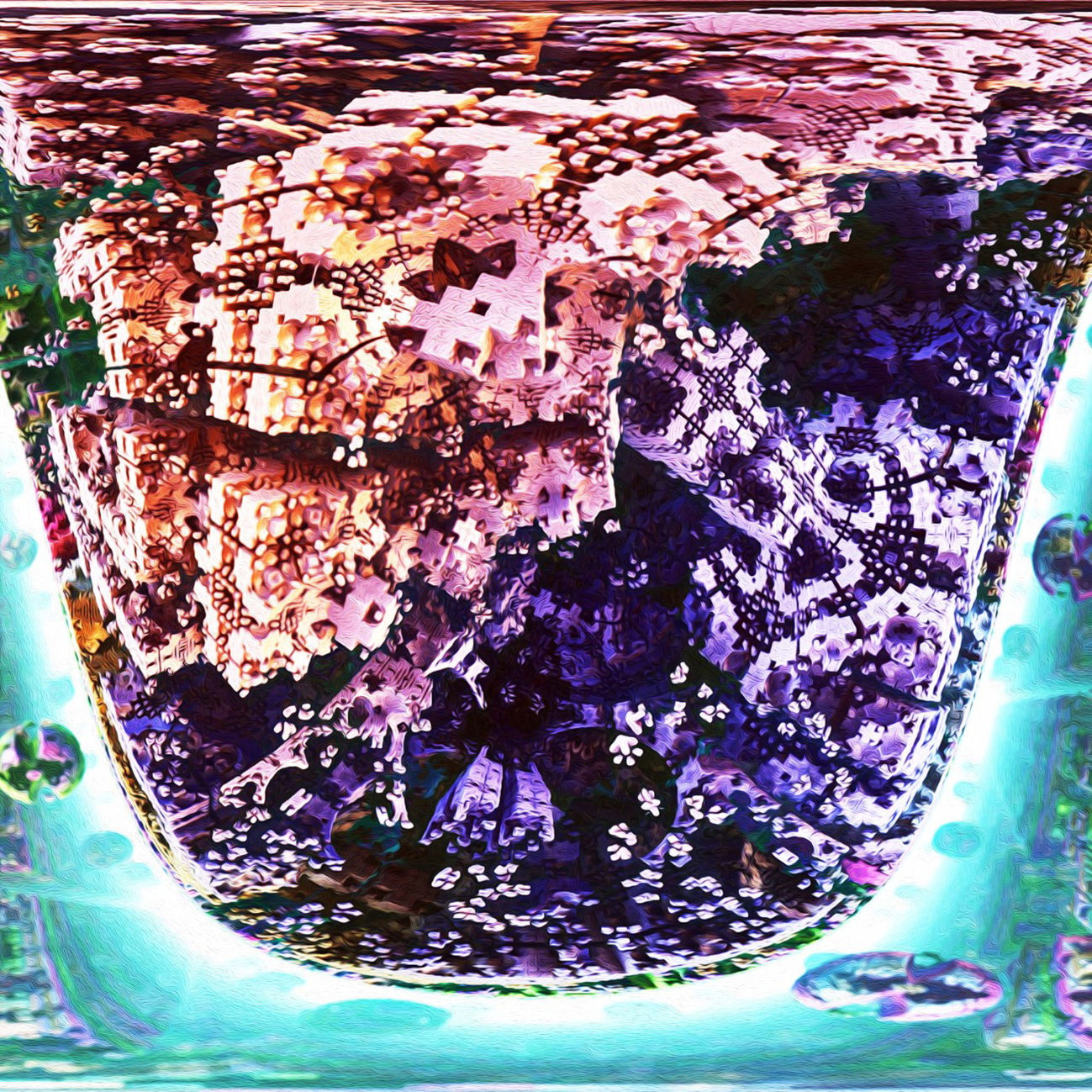
Milad Showkatbakhsh, Geometrical Representation of Highly Organised and Dense Fractal Morphologies.
Supervision team
Michael Weinstock
George Jeronimidis
2017
~
2021
Keywords
architecture, urban sociology, homeostasis, evolutionary computation, biological principles
Abstract
The ambition of this research is to abstract principles of homeostasis and its connection to the evolutionary development of natural systems in order to define and develop a set of experiments capable of producing a computational design engine. This engine generates testable mathematical models with a specified degree of mutability, or adaptation to differing circumstances and environments. The abstracted principles are used to evolve a set of urban tissues, with a particular focus on the environmental behaviour of their interstitial spaces across a range of temporal and spatial domains, and are complemented by conceptual and computationally simulated designs, evaluations and principles of implementation.Although biomimicry has been established for many decades and has made significant contributions to engineering and architecture, homeostasis has rarely formed part of this field of research. As suggested by the distinction between the original and revised editions of Steadman’s The Evolution of Designs: Biological Analogy in Architecture and the Applied Arts, the idea of nature has shifted from formal metaphor to a repository of interconnected dynamic processes available for investigation and simulation. Seeking deeper insight into natural systems and processes has accelerated in the past two decades in response to environmental emergencies. There is a growing confidence that the application of principles derived from natural systems in architectural design can facilitate a closer alignment between architecture and nature.Homeostasis is the term for the biological processes through which individual beings and collectives maintain a steady state within their environment. A wide range of morphological and behavioural traits across species are rooted in these homeostatic processes. To examine the interrelations of form, process and behaviour can therefore yield useful strategies for computational urban design methodologies requiring significant environmental performance enhancements.
Bio
Milad holds a degree in Architectural Engineering from Shahid Beheshti University in Tehran and a Master of Architecture from Pratt Institute, where he received the Sidney Katz Award for Design Excellence in 2015. He later completed his PhD at the Architectural Association. He has worked internationally as a computational design specialist, taught advanced computational design since 2010, and co-developed Wallacei, an evolutionary optimisation platform. His research focuses on homeostasis, morphogenesis and evolutionary design processes.
Contact